
Traditionally, the Energy Transition towards #NetZero has been characterized by solving the general energy trilemma: Security of supply, Cost of supply and Sustainability of supply. These represent the basic three dimensions of concern. Is there a Fourth Dimension? How?
From a wider perspective, the transition can be achieved via six technological avenues: a well-documented holistic approach by IRENA (Figure 1).
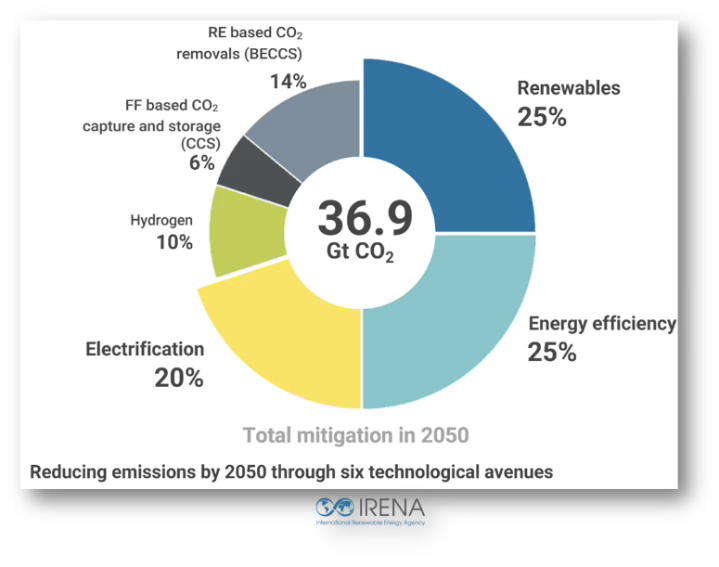
Figure 1 – IRENA’s Six Technological Avenues to Achieve Globa Net Zero by 2050
Since the landmark 2015 Paris Agreement on limiting the global mean temperature rise to below 2°C (preferably 1.5°C) relative to pre-industrial baseline, global energy transition efforts have been ongoing and accelerating. It is always beneficial to take stock and measure against the set KPI (below 2°C, preferably 1.5°C) periodically.
A question arises: how are we (the world) doing so far? The straight answer is sourced from credible data, and the result is not as good as we should have. By end of 2024, the annual global mean temperature rise crossed the preferred limit (Figure 2). Furthermore, the temperature rise trajectory is nothing to celebrate about.
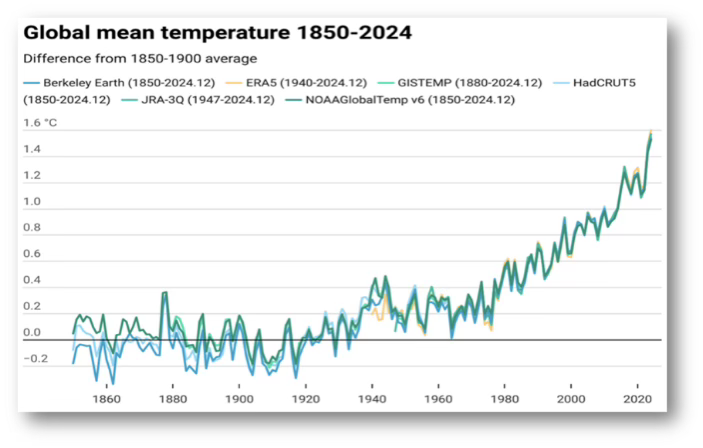
Figure 2 – Annual global mean temperature anomalies relative to a pre-industrial (1850–1900) baseline shown from 1850 to 2024 (Source: World Meteorological Organization)
However, it is not a gloomy and doomy situation yet. There are signs of progress. According to IEA’s World Energy Investment 2025 report, global clean energy investments now surpass fossils (Figure 3). Global energy investment set to rise to $3.3 trillion in 2025, a 2% rise in real terms from 2024. A total of $2.2 trillion is going collectively to renewables, nuclear, grids, storage, low-emissions fuels, efficiency and electrification, twice as much as the USD 1.1 trillion going to oil, natural gas and coal. Such trend is welcome and encouraging.
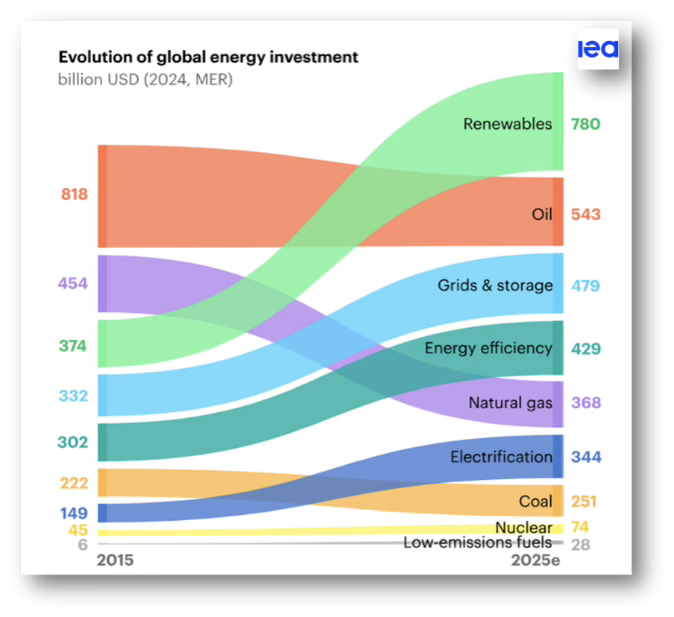
Figure 3 – Evolution of Global Energy Investment 2015-2025e (Source: IEA)
Recapping: the world has set a KPI (below 2°C, preferably 1.5°C), already crossed the preferred ambitious target in 2024, and is investing double or more in clean energy than fossils in 2025. Consequently, what is wrong and how can the world reposition or adjust to keep on track for the set KPI? In this case, we can “borrow” from the common wisdom phrase: “wealth (i.e. prosperity) is defined by how much free time you have”. Hence to achieve our KPI, we need to set a new dimension, aka the Fourth Dimension of clean energy: the Speed-Acceleration combo. However, first thing is first. What is next? What are the possible global warming scenarios/pathways with implemented and accelerated polices? According to an insightful analysis from BCG’s The Energy Transition’s Next Chapter report (Figure 4), the world is on track to reach a level of warming that significantly exceeds 2°C above pre-industrial levels based on implemented policies.
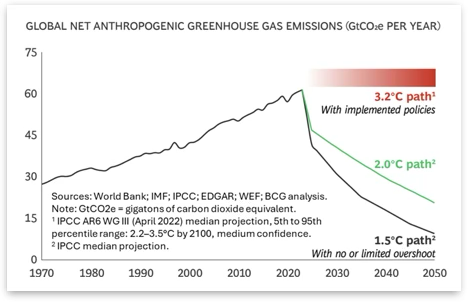
Figure 4 – GHG Emissions and Global Warming Pathways (Source: BCG)
Although forecasting models come with uncertainty based on underlying assumptions and methodology, the general trajectory is quite telling. Furthermore, the economic effects of global warming cannot be taken lightly. According to a study on the macroeconomic effects of climate change by the National Bureau of Economic Research, each 1°C increase in global temperature can be linked to a 12% decline in global GDP. Hence, the climate change level of urgency is crystal clear. By means of an analogy, if climate action was a race, then the German Autobahn solution is appropriate, albeit driving responsibly!
Consequently, the Fourth Dimension should be utilized to its fullest potential. This translates to:
- Time is of the essence. Every moment lost slows the world’s collective progress toward limiting global warming and a sustainable net zero future. By acting decisively and without delay, the world can harness momentum and overcome existing barriers. We should ensure that innovations in clean energy are swiftly translated into impactful solutions.
- We need to implement the six technological avenues of clean energy projects faster (Speed). Fast-tracking the implementation of clean energy projects is not merely a matter of increasing the number of initiatives. It requires a fundamental transformation in the way we approach energy infrastructure, policy, and investment. Speed encompasses streamlining regulatory approvals, fostering international collaboration, incentivizing technological innovation, and mobilizing both public and private sector resources more effectively. For example, governments should expedite permitting processes for clean energy installations, reduce bureaucratic bottlenecks, and set clearer targets that encourage rapid deployment. Industries and investors must pivot swiftly, reallocating capital towards emerging clean technologies and scaling up proven solutions with minimal delay. The faster we can implement large-scale clean energy projects, the greater the chance of bending the emissions curve downward and keep the global temperature rise within the critical thresholds outlined by international agreements.
- We need to implement additional clean energy projects at scale (Acceleration). According to IRENA’s World Energy Transitions Outlook 2024 report, we need at least 2.5-fold increase in annual clean energy investment from 2023 level till 2030. In addition, IRENA estimates the required cumulative investment to be around $47 trillion for 2024-2030 period. Such financial commitment must be matched by a dramatic ramp-up in the pace and scope of implementation. Accelerating the rollout of clean energy projects requires embracing flexibility and adaptability. As technological advancements emerge, systems must be in place to quickly integrate new solutions, whether it’s carbon capture and storage, next-generation batteries, green hydrogen and e-fuels, efficiency and electrification, or advanced grid management tools. This ensures that the energy transition remains robust in the face of changing circumstances. Moreover, and to unlock untapped clean energy demand, acceleration requires governments to promptly address and remove the unfair direct and indirect fossil fuel subsidies, as well as introduce carbon pricing and emissions trading systems.
- The Fourth Dimension does not take place out of hope. It requires foundational elements and key enablers. At the core lays the workforce capacity building, i.e. green skills development through, skilling, upskilling, and reskilling. Governments should undertake comprehensive long term capacity building strategy which includes both detailed planning as well as implementation roadmap phases. The Fourth Dimension requires an investment in a side hustle project, or more accurately put, an adaptation and resilience program that runs in parallel to energy transition programs. This is to safeguard against the impacts of climate change such as the ever more evident and frequent extreme weather events and their respective impacts. The program should involve taking practical steps to reduce vulnerability and build capacity to withstand these events consequences. The goal is to ensure that societies, environments, and infrastructure are resistant to climate change impacts and can endure in a world with a less stable climate. To understand the seriousness of the situation, we explore markets signals. In this case, the vigilant insurance market, where climate change related risk premiums are rising. We also see certain risks (e.g. severe storms, flooding, wildfires, etc.) are excluded from cover, and terms being revised.
- The Fourth Dimension should not be undertaken in a silo approach. In a changing and complex world, new risks are emerging, namely geopolitical, technological and economic risks. Due diligence must address these key challenges, as highlighted by IEA’s Summit on the Future of Energy Security background paper. In a nutshell, areas of concern include national priorities divergent from the global energy transition cooperation agenda, cyber and physical threats to energy infrastructure, geographic concentration of supply chains (technology manufacturing and critical minerals), and changes in energy demand-supply as well as trade. While these emerging challenges and risks present significant hurdles, they also open up valuable opportunities for innovation and global collaboration. Addressing supply chain vulnerabilities can drive the diversification and localization of technology manufacturing. Tackling cyber and physical threats to infrastructure encourages the development of advanced security technologies, creating new markets and expertise. Furthermore, navigating shifting geopolitical priorities can catalyze fresh partnerships and alliances, accelerating the adoption of clean energy solutions worldwide.

In conclusion, the race to achieve global net zero is not solely about the vital innovation and investment. It is about the urgent acceleration of action as well. The world’s ability to meet its climate goals depends on how rapidly and decisively nations and industries can deploy clean energy solutions at both speed and scale. To ensure success, the Fourth Dimension should be complemented with supportive programs, including but not limited to removal of barriers and bottlenecks, local human capital capacity building, climate change impacts adaptation and resilience, and mitigating new emerging risks. By embracing this Fourth Dimension in a holistic approach, where time is our most valuable and limited resource, we can hope to realign our trajectory and secure a sustainable future for succeeding generations.