
Australian startup Endua enlists the help of Phoenix Contact for its modular hydrogen energy storage system
Endua is a Brisbane-based company focused on developing innovative, hydrogen-powered energy storage solutions. Their mission is to provide clean, reliable, and long-term energy storage, targeting remote industries such as mining, remote communities, and other off-grid energy users. The company aims to address one of the key challenges in renewable energy: ensuring consistent power availability, even when sources like solar and wind aren’t generating energy.
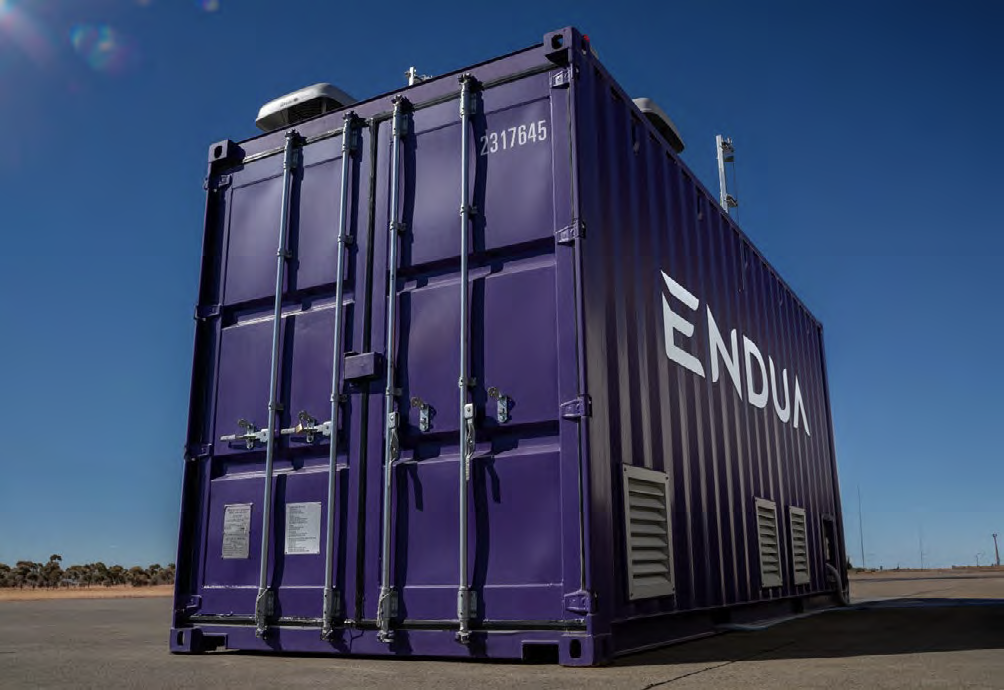
Figure 1_lead image:
A scalable control and safety system improves the control and information availability of a modular hydrogen energy storage system
(Image source: Endua)
Backed by CSIRO, Ampol, and venture capital firm Main Sequence, Endua’s technology leverages hydrogen for multi-day energy storage, offering a more sustainable alternative to diesel generators and other fossil fuel-based energy solutions. Ampol, which holds a stake in Endua, supports the startup as part of its broader energy transition strategy, seeking to provide customers with new energy solutions.
Endua’s power bank technology is a modular system based on hydrogen electrolysis, using electricity (ideally from renewable sources) to split water into hydrogen and oxygen. The hydrogen is stored and used to generate energy through electric power delivery via fuel cells when needed. The entire system is built as a modular system in transportable shipping containers.
Using hydrogen to store energy allows multiple days of storage, providing a significant advantage over typical lithium-ion battery storage, which is usually limited to shorter time frames.
“We are therefore enabling the distributed generation of hydrogen, generating it where it is needed and eliminating the need to generate large amounts and transport it around the country”.
“Endua was founded in 2021 to commercialize CSIRO research in PEM electrolysis technology and formed the company to take it to market”, said Tim Latimer, Head of Growth and Business Development at Endua. “We see hydrogen as a zero-emissions direct replacement for fossil fuel generators in commercial, industrial, and utility scale applications”.
Reducing the cost barrier
The World Economic Forum has found that 85% of the cost of hydrogen is in large-scale storage and compression (50%) and transportation (35%), leaving some to question its current economic viability. At the least, large-scale hydrogen production needs to be located close to the industries that consume it.
“The hydrogen industry as a whole is working on large-scale generation, costing into the billions of dollars, which needs to be located close to large consumers. This is where the cost challenges in developing hydrogen infrastructure are arising”, said Latimer. “For the smaller user of hydrogen, the challenge is the cost of transportation.
“This lends itself to the development of a system that is self-sufficient and allows the user to generate their own hydrogen, store it, and use it – all on the one site.
“Today, hydrogen technologies are already competitive with lithium-ion batteries and fossil fuels in specific use cases. In long-duration storage applications (days to weeks of stored energy), the cost per kilowatt-hour of storage in a power bank is more competitive than using lithium batteries”, Latimer added. “Elsewhere in the hydrogen system, advancements in electrolyzer and fuel cell technologies will assist in reducing costs further, which will continue to open new applications and markets for the technology”.
Benefits of the Endua power bank
Endua’s system offers several key benefits:
- Modular and scalable design: The storage solution is designed to be flexible, allowing users to scale up the energy capacity based on specific needs, whether for small remote communities or larger industrial applications.
- Reliable off-grid power: The technology is particularly suited for industries that are currently dependent on diesel generators, such as mining, agriculture, and remote infrastructure. By switching to hydrogen, these industries can reduce their carbon footprint while maintaining reliability.
- Integration with renewables: Endua’s system can integrate with renewable sources like wind and solar, and by storing excess energy generated during peak production times, it can supply power when generation is low.
- Long-duration storage: Traditional batteries often struggle with longterm storage. However, Endua’s hydrogen technology is designed for multi-day energy storage, making it ideal for scenarios where extended power availability is crucial.
“The power bank solution provides modularity to our customers in two ways”, said Latimer. “Firstly, the power bank design itself has three key areas of flexibility depending on the customer’s use case: the electrolyzer size, hydrogen storage capacity, and fuel cell size can all be modified independently of each other. Therefore, if a customer needs a lot of energy storage at a low peak demand, they can increase the storage capacity while keeping the fuel cell system smaller. This better aligns the system design to the application and reduces the potential impact of overcapitalizing.
“Secondly, we can provide multiple systems together to increase the overall capacity and size of the system. The power bank units are capable of being stacked in parallel to provide greater input and output power capabilities. This can be achieved centrally or distributed throughout a microgrid”.
The Endua power bank is designed to easily integrate with renewable energy generation systems by utilizing an AC-coupled architecture.
“The power bank can connect to any AC electrical system”, said Adam Davidson, Control Systems Engineer at Endua. “This allows other forms of renewable energy in that system to be utilized by the power bank. We utilize PEM electrolysis technology due to its ability to dynamically follow the variable output of renewable energy systems”.
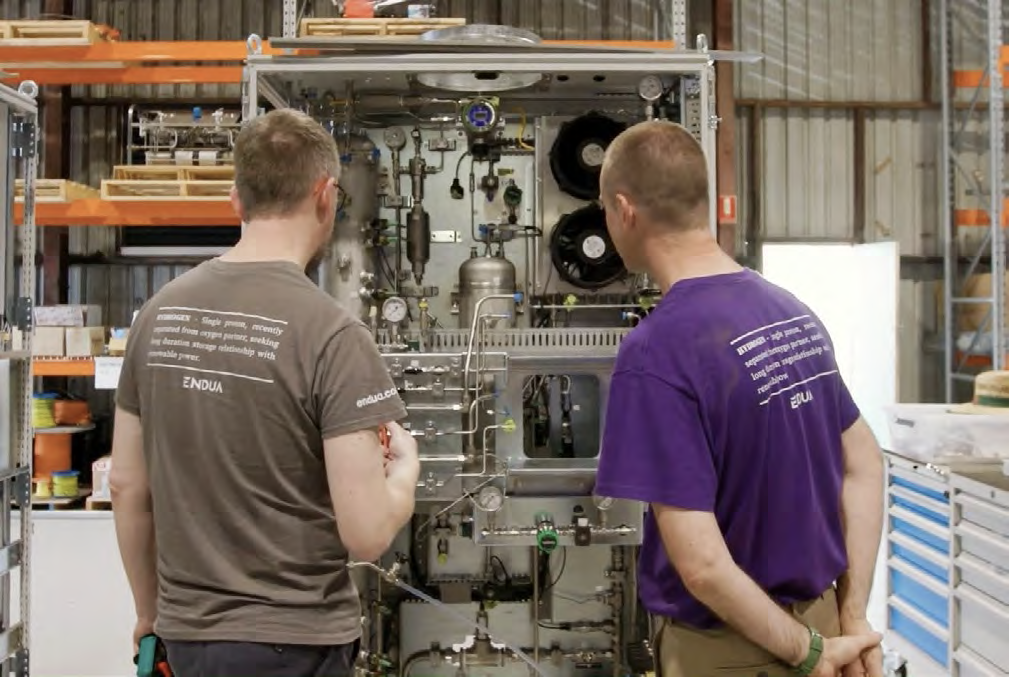
Figure 2:
Endua focuses on developing clean, reliable and long-term energy storage for remote industries, communities and off-grid energy consumers
(Image source: Endua)
Partnering with Phoenix Contact
After developing a first generation of test systems, Endua set about building the first power banks to prove the concept and have them deployed around Australia for demonstration and testing purposes. These first-generation systems required a reliable, scalable, and accurate control and safety system, so Endua approached Phoenix Contact for a comprehensive solution that would be scalable and offer worldwide support. Phoenix Contact’s presence worldwide will make sure that Endua’s power banks can be manufactured and supported anywhere around the globe in the future.
“All three of these issues were promptly identified and resolved by Phoenix Contact’ application engineers”.
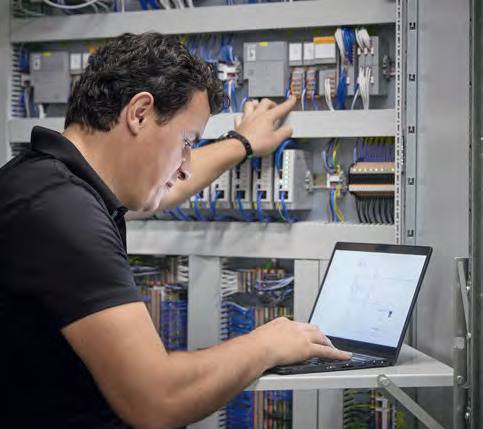
Figure 4:
The Endua and Phoenix Contact sales teams worked closely together to develop the power bank
“Phoenix Contact provides the full suite of electrical and automation products at competitive prices: everything from surge protectors, circuit breakers, and power supplies to signal converters, PLCs, and safety systems”, said Davidson. “Sourcing all our control system equipment from one vendor means that we get a consistently high-quality solution with minimal design and procurement effort”.
The first generation of power banks was built using PLCnext PLCs in conjunction with PSRmodular technology. Endua also relies on Phoenix Contact’s Price & Availability Guarantee initiatives for longterm commitments in their projects.
“While designing the power bank, we worked closely with Phoenix Contact’s sales team to ensure we had the right solution for our application”, said Davidson. “Then during software development and commissioning, we were able to leverage the experience of the Phoenix Contact application engineers to resolve obstacles and speed up project execution”.
“A good example was in the development of the safety system”, said Davidson. “As part of our safety system, we monitor for hydrogen leaks. During commissioning, we had some challenges in accurately reading the analog signals from the gas detectors into the safety controller and PLC. This turned out to be three separate problems. There was a wiring error, the analog input module was not properly configured, and communications between the safety controller and the PLC was not properly configured.
The complete control cabinet
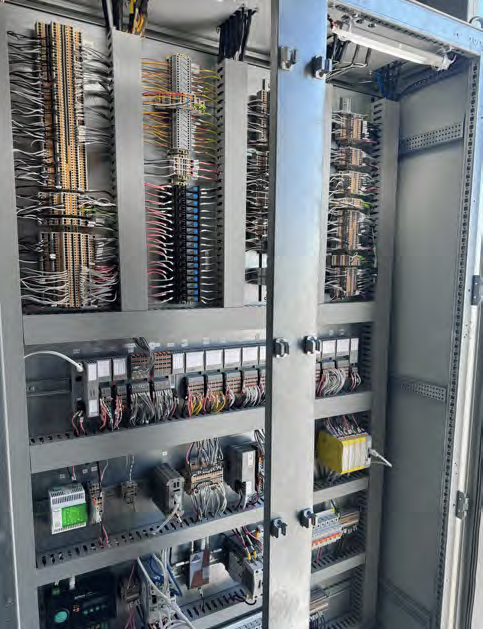
The control cabinet of the power bank systems is equipped with, among other things, standard and safety controllers, surge protection, cables, terminal blocks, lighting, I/O systems, Ethernet switches and communication gateways from Phoenix Contact
(Image source: Endua)
Phoenix Contact supplies most electrical and control components for the power bank systems, including PLCs, safety controllers, IPCs, surge protection, cables, terminals, lighting, I/O systems, Ethernet switches, and communication gateways.
Phoenix Contact’s PLC technology, PLCnext, is designed for programming with high-level languages, as well as classic IEC 61131-3 languages, and can be extended with modules for the Axioline and Inline I/O systems.
The PSR-configurable safety modules come with TÜV-certified software, which allowed Endua to develop the safety logic with minimal programming knowledge, and a modular design allows the controllers to be easily adapted to meet requirements.
Proactive maintenance in the cloud
Like any other system, Endua’s power banks will require periodic maintenance. Water filters and air filters can be maintained by the user, and gas detection calibration can be done by a licensed tradesperson, while the PEM electrolyzer stacks are designed to be replaced in the field.
“Electrolyzers get less efficient over time, depending on the duty cycle”, said Latimer. “In effect, the voltage required for electrolysis increases over time, so you get less hydrogen for the same power consumption or more electrical energy must be consumed to produce the same volume of hydrogen. Eventually, there will come a point where the PEM stack needs to be replaced and recycled”.
This is where the Phoenix Contact IPC and communication hardware comes in. Endua utilizes Ignition SCADA from Inductive Automation, running on the IPC, to remotely monitor the power bank via a cloud-based infrastructure.
“The industrial PC converts control system data to MQTT and sends it to our cloud server, where we can record the performance of the Bank components over their entire lifetime, allowing us to predict when it will need maintenance,” said Adam. “This is particularly important if Power Banks are to be deployed in remote areas.”
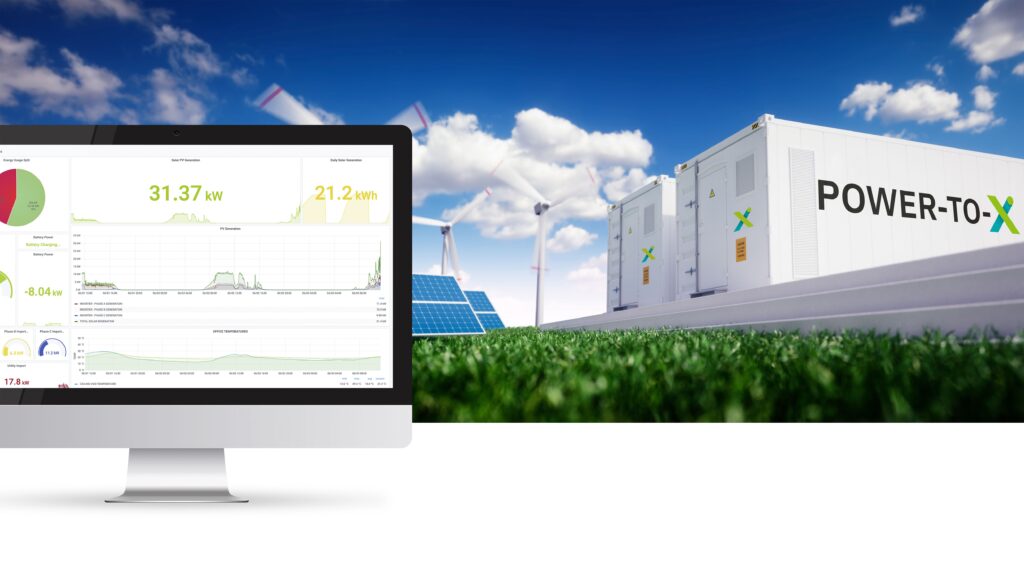
Figure 5:
The industrial PCs convert the data from the control system into the MQTT protocol and send it to a cloud server so that the performance of the Powerbank components can be recorded over their entire service life and maintenance can be planned in advance
(Image source: [email protected]; [email protected])
Future plans: system enhancements
Endua is now working on a second-generation test system to enhance their internal R&D capability. To that end, the Phoenix Contact PLCnext Control system is being utilised to combine PLC, safety and IPC technology into a single unit.
The upgraded system will represent a huge advance in Endua’s safety system, as well as add better control and information availability to the system overall while reducing the total cost of
ownership.
Being able to program everything from within the console on PLCnext Engineer software and load it straight into the controller will speed up the process of programming, testing, and modifying the safety system while offering extra input directly to the control and information system.
For the second-generation test system, Endua took advantage of Phoenix Contact’s Complete Cabinet Confidence service, which has all electrical components inside the test system control cabinets specified to be Phoenix Contact devices. Endua also enrolled in the Phoenix Contact Lifetime Warranty program.
Phoenix Contact supplied all electrical and control components, including PLCs, safety controllers, surge protection, power supplies, cables, terminals, DIN rails, cable ducts, lighting, I/O systems, and Ethernet switches
Technology benefits for the second-generation test system
The PLCnext Control integrated solution with safety offers numerous advantages over the initial power bank configuration”, said Eduardo Aruda, Product Manager at Phoenix Contact. “By adopting an innovative integrated solution, Endua aims to enhance their operational efficiency, save costs, and ensure a safer working environment”.
“From the system design perspective, with the PLCnext Control integrated solution, the system architecture is significantly simplified“.
“Instead of designing and managing two separate systems for automation and safety, Endua’s engineers have focused on a single, cohesive system, reducing the complexity of the design process and minimizing the potential for errors. A unified programming environment allows engineers to develop both automation and safety functions within the same platform. This not only streamlines the development process but also ensures consistency and compatibility between the two functions”.
Reference
- World Economic Forum 2024, The hidden 85 %: How to make hydrogen cost-effective,
https://www.weforum.org/stories/2024/05/hydrogen-hidden-costs-energy-transition/
3012405728 2025-02-28/00